



| You are here: what we do > issues we work on > make trade fair > understanding the issues |
![]() |
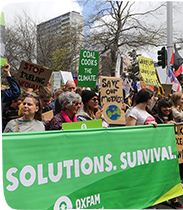
| Photo: Oxfam protesters aboard the good ship 'Development' as it sinks into Lake Geneva during the World Trade Organisation talks. Credit:Oxfam |
The Make Trade Fair campaign demands new, fair trade rules that will make a real and positive difference in the fight against poverty.
Millions of poor farmers in developing countries are struggling to earn a living because of cheap, often dumped, food imports. Rich countries tell poor countries they must get rid of subsidies, while continuing to spend US$1 billion a day on subsidising their own farming enterprises. The consequences for poor farmers are that the price of their produce is driven down and they find it impossible to compete.
Rich countries limit and control poor countries' share of the world market by charging high taxes on imported goods. As a result, many poor countries can only afford to export raw materials, which give far lower returns than finished products. For example, the rich world buys cheap cotton and cocoa and turns them into expensive clothes and chocolate - reaping all of the profit. At the same time, poor countries are threatened with having loans withheld unless they open their markets to rich countries' exports.
Rich countries are also increasing demands on poor countries to liberalise services. This would companies the right to supply services such as education, hospital care, water and sanitation. This is the price Tonga is being asked to pay, despite the fact that New Zealand, the US and EU themselves have all refused.
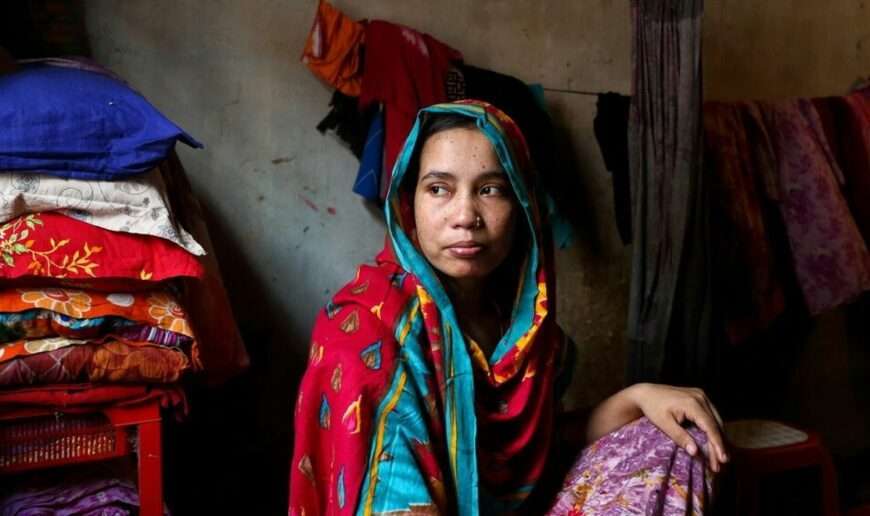
Globalisation and trade have drawn millions of women in developing countries into paid work. Their labour is contributing to rising global prosperity and to the profits of some of the world's most powerful companies. But women workers are systematically being denied their fair share of the benefits from their labour.
Companies' demands for faster, more flexible, and cheaper production in their supply chains are undermining the very labour standards that they claim to be promoting. Women workers – and their families – pay the price. Many face insecure contracts, intense production pressure, and intimidation in the workplace. Governments, competing to attract investment and boost exports, too often exacerbate the problem. Instead of strengthening protection for labour rights, they have simply traded them away.
A regional free trade agreement removes all barriers to trade, meaning that poor economies are not allowed to use import tariffs to protect their growing industries or their farmers from floods of cheap imports. The US and the EU in particular, are pressing ahead with this piecemeal approach to trade. And without the advantage of 'strength in numbers' that poor countries had at the WTO talks, they are much more likely to be pressed into accepting unreasonable demands of rich countries.
When poor countries are prevented from controlling imports and from imposing import tariffs, they leave themselves open to increased imports and to ‘dumping'. They also lose the only mechanism by which they can regulate trade policies to support rural development and long-term economic growth. They miss out on the revenue from import tariffs; revenue which can be used to fund social welfare such as health and education, or that can be used to protect their own farmers or other industries until they are strong enough to survive without support. Almost every developed country in the world used these types of policies to bring about economic growth. But now they've made it to the top, they've decided to kick away the ladder.
Most developed economies used policies to protect their industries from foreign competition until they were big enough to survive without support. But now they are using the World Trade Organisation (WTO) to deny poor countries the same route to economic development.
The free trade argument says: if all trade restrictions like import tariffs and quotas were dropped, each country would do what it does best and all would prosper. But this level playing field is a myth. Fledgling industries in poor countries are no match for large multi-national businesses.
The fair trade argument puts people at the centre of world trade. Trade rules should allow people to sell their produce to rich countries and other developing countries at a decent price. They should also be able to protect their economies until such time as they are established enough to compete with the more developed countries.
Oxfam believes that WTO rules must change. Trade barriers in rich countries should be removed while allowing poor countries to protect their markets until they are strong enough to compete.
New Zealand holds a keyposition at the World Trade Organisation (WTO) since the Chair of the Agriculture negotiations is NZ's Crawford Falconer. But our influence may not be for the benefit of the poor.
The government's position has traditionally been in favour of one-size-fits-all trade liberalisation, which will not benefit the world's poorest farmers. Most of them are smallholders, struggling to earn a living on poor soils, facing high transport costs and with little government support. They have not had the advantages that generations of New Zealand farmers have had in building up an infrastructure for efficient production.
The priorities for developing countries must be food security and rural livelihoods, not trade liberalisation. Oxfam New Zealand is calling on the New Zealand government to use its influence at the WTO to ensure that developing countries do not face pressure to prematurely open up their agriculture markets.
Liberalisation ... GATS ... Doha Development Agenda ... trade barriers