
Life without safe water
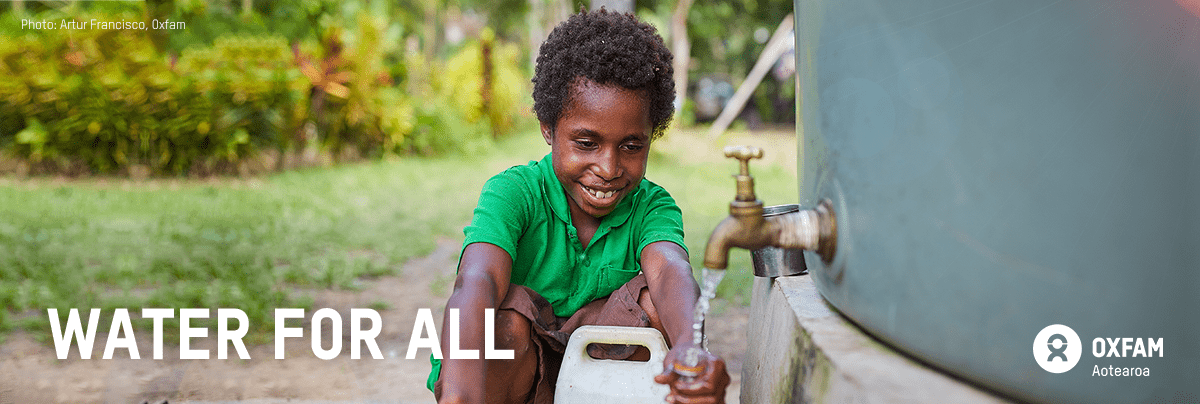
Without a safe water source nearby, women and children spend a great deal of time travelling long distances to collect water for drinking and washing. This means women have less time to engage in paid work, and children spend less time in school.
Without basic sanitation, many women are forced to wait until darkness falls to relieve themselves with at least some privacy, putting themselves in considerable danger.
When water and sanitation are provided to communities, they can spend more of their money on food, healthcare and education rather than on water.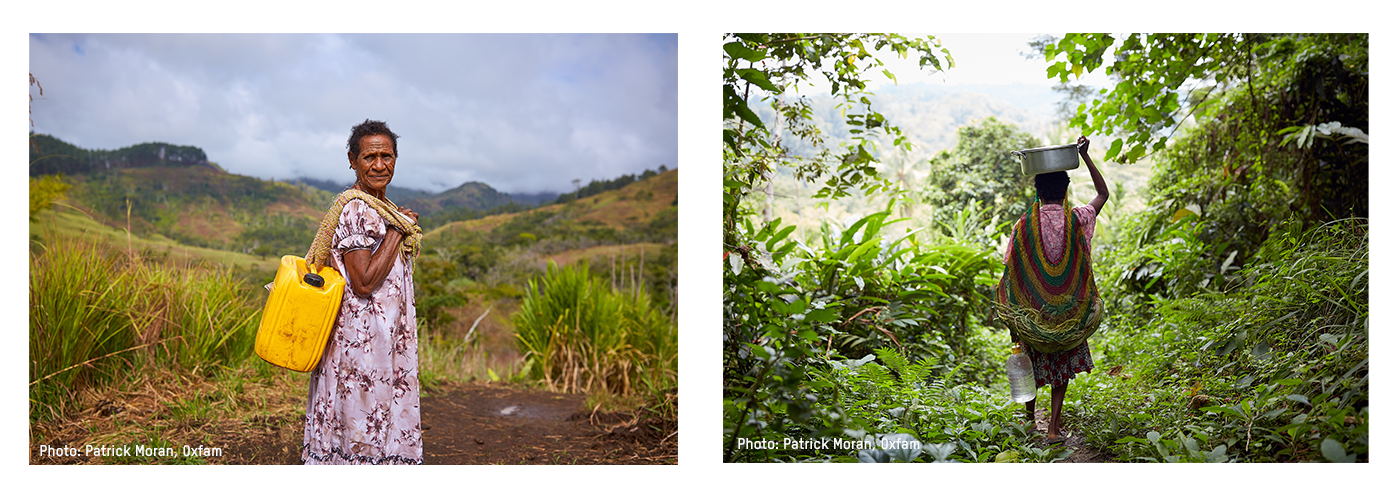
Sustainable solutions
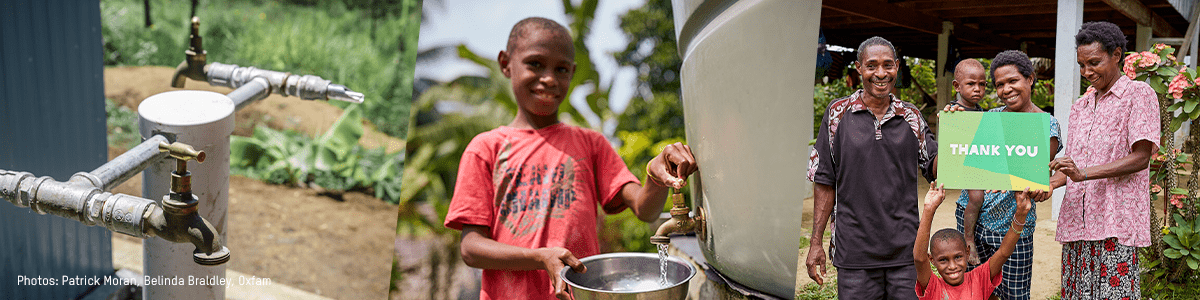
Often the solution to providing safe drinking water is not complicated – the engineering requires just some know-how, a few materials and a bit of hard work. Oxfam’s water and sanitation programmes:
- are affordable
- are appropriate to local conditions
- use water efficiently
- ensure that local communities can operate and maintain the facilities in the long term
Deciding which technologies to use depends on a community’s specific needs and the water sources available in the area.
Key statistics
- Globally, more than 785 million people do not have access to basic water services and 884 million people do not have safe water to drink.
- More than 25% of the world’s population (over 2 billion people worldwide) do not have access to basic sanitation.
- In Papua New Guinea, 78% of the population, which is more than 4 million people, do not have access to sanitation services.
- In Solomon Islands, 80% of rural households and schools have no sanitation system.
You can help change these statistics by supporting Oxfam’s water and sanitation programmes throughout the Pacific.