
Climate impacts will affect the entire global economy…
 |
|
Customers and street vendors adapt to life on the flooded streets of Dhaka, Bangladesh. Photo: Shafique Alam/Oxfam |
Climate change is already taking a substantial toll, not just on human life but on the economy. The Global Humanitarian Forum estimates that economic losses due to global warming already amount to over $165 billion annually – more than the flow of aid from rich to poor nations – and are expected to rise to $450 billion each year by 2030.
In March of 2009, more than 2000 climate scientists from 80 countries met in Copenhagen and issued a shocking warning: we are exceeding the worst-case predictions made by the Intergovernmental Panel on Climate Change (the IPCC - a high level, independent, scientific advisory body) in their last major report from 2007.
In 2007 the IPCC developed a scenario for 2080 that predicts the following types of impacts, assuming there is no action to limit greenhouse gas emissions:
-
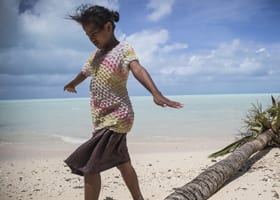
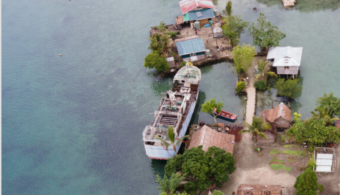
Sea levels could rise - the IPCC estimated that sea levels could rise 18-59 cm by the end of the century, but scientists in Copenhagen (March 2009) presented new research showing that sea level rise will likely be in the range of 50cm – 1 m, or possibly more. What does that mean? Even the best case scenario will hit low lying coastal areas that house one in ten humans on the planet.
-
Water shortages – Over 3 billion people in the Middle East and the Indian sub-continent could be facing acute shortages of water.
-
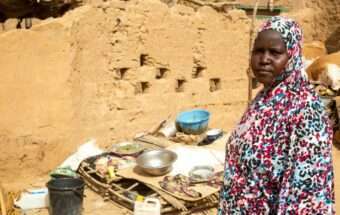
Erratic rainfall patterns – Drought and floods could increase, but the most damaging shifts would likely be relatively small changes in rainfall which, cumulatively, could dramatically decrease global crop yields; areas such as sub-Saharan Africa, South East Asia and tropical areas of Latin America could face acute food insecurity.
-
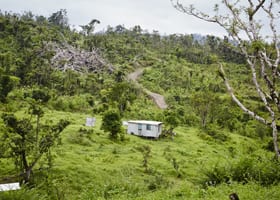
Increased frequency and intensity of cyclones– Leading to loss of life, injury, mass population dislocations, and economic devastation of poor countries.
-
Damage to human health – People's resistance to disease could be weakened by heat stress, water shortages, and malnutrition. Increases in air pollution could lead to a rise in respiratory illnesses. In these conditions infectious diseases such as malaria, dengue fever, schistosomaisis could proliferate rapidly.
…but they will affect the poorest people first and worst
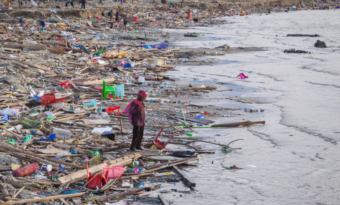
The impacts of climate change are seriously (and disproportionately) affecting the livelihoods, health, and educational opportunities of people living in poverty, as well as their chances of survival. Between 1990 and 1998, more than 97 per cent of all natural disaster-related deaths were in developing countries.
- People living in poverty are more likely to live in unplanned, temporary settlements, which are erected on unsuitable land – most prone to the risks of flooding, storm surges and landslides;
- Most eke out a precarious economic existence – subsistence farming or fishing – and have no savings or assets to insure them against external shocks;
- They lack sanitation and their limited access to clean water, poor diet and inadequate healthcare provision undermine their resistance to infectious diseases;
- Their lack of social status and the informal nature or remoteness of their settlements means that they do not receive adequate warnings of impending disasters;
- Relief efforts are least likely to reach them;
- Lack of education and neglect means they have little alternative after disasters but to remain in or return to the disaster-prone areas, with diminished assets, and await the next, calamitous event.
Climate change is a human problem, affecting people’s rights and justice
Climate change is environmental change, but it is fundamentally a human problem. Human societies are affected both directly and indirectly by the climate system and it is our activities that are driving climate change.
As a global challenge, climate change lies outside the sphere of influence of poor communities and poor countries, which have little to say in how the challenge will be addressed. Further, those with special burdens and vulnerabilities such as women, ethnic minorities, and people living with HIV and AIDS are feeling yet another pressure in global warming – one that is fundamentally unjust.