

Together, we can save lives and help communities rebuild.
Each year more than 30 million people flee their homes or lose their livelihoods as a result of conflict and natural disasters. We believe everyone has a right to a warm, safe and secure home – and we know you feel the same.
Oxfam is one of the world’s leading providers of humanitarian aid in emergencies, with well-recognised expertise in clean water, sanitation, public health, food security, and the protection of civilians. We have a strong reputation for scale, speed, and innovation.
Oxfam responds directly wherever there is a widespread threat to life, health, and livelihoods. And we stay for the long-term to rebuild lives and reduce the risk of future disasters. With your help, we have launched rapid responses after tropical cyclones, earthquakes and volcanoes, such as the earthquake in Turkey and the tsunami in Tonga. We also support those who have been displaced by conflict, such as we are seeing in Myanmar, Afghanistan and Ukraine.
HUMANITARIAN RESPONSES
Five humanitarian projects were implemented during 2022-23 including continued work on hygiene and gender protection with Rohingya refugees in Cox’s Bazar, water and food security for people affected by Tonga’s volcanic eruption and tsunami, and new outreach to vulnerable people impacted by flooding in Timor-Leste, droughts and floods in East Africa and refugees fleeing the war in Ukraine.
These projects reached a total of 317,607 girls, boys, women and men including elderly and people living with disabilities.
You can help
EARTHQUAKE IN SYRIA & TURKIYE
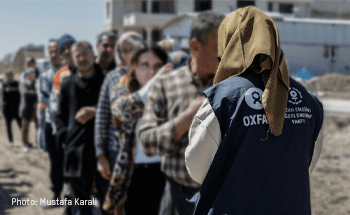
In February, a 7.8 earthquake struck southern and central Türkiye and northern and western Syria. It was felt as far as Egypt, Israel, Palestine, Lebanon, Cyprus, and the Black Sea coast of Türkiye. The earthquake left millions of people homeless, with over one million individuals living in overcrowded emergency shelters or tent cities. Among these affected populations, Syrian refugees, who have sought safety in Türkiye over the past 12 years, are particularly vulnerable. Through our organisation Oxfam KEDV (Foundation for the Support of Women’s Work), more than 24,000 people were reached with hygiene kits, dignity kits, and menstrual hygiene kits. There have been efforts to improve access to clean drinking water by building toilets and showers in areas with insufficient facilities. Additionally, food assistance has been provided through cooked meals and food kits.
UKRAINE
Since the beginning of the war in Ukraine, Oxfam has been on the ground at the border, helping refugees who were fleeing violence. From March 2022 our partners in Ukraine have provided food, hygiene products, legal and psychosocial and cash assistance, organized safe transport and shelter, repaired damaged homes and restored livelihoods. Together we have supported more than 1.1 million people with vital humanitarian assistance across Ukraine, Poland, Romania, and Moldova.
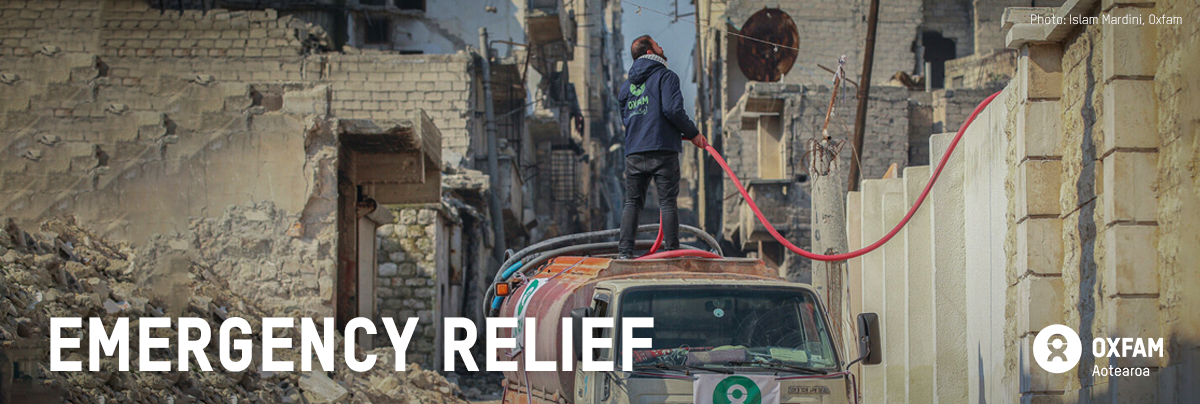
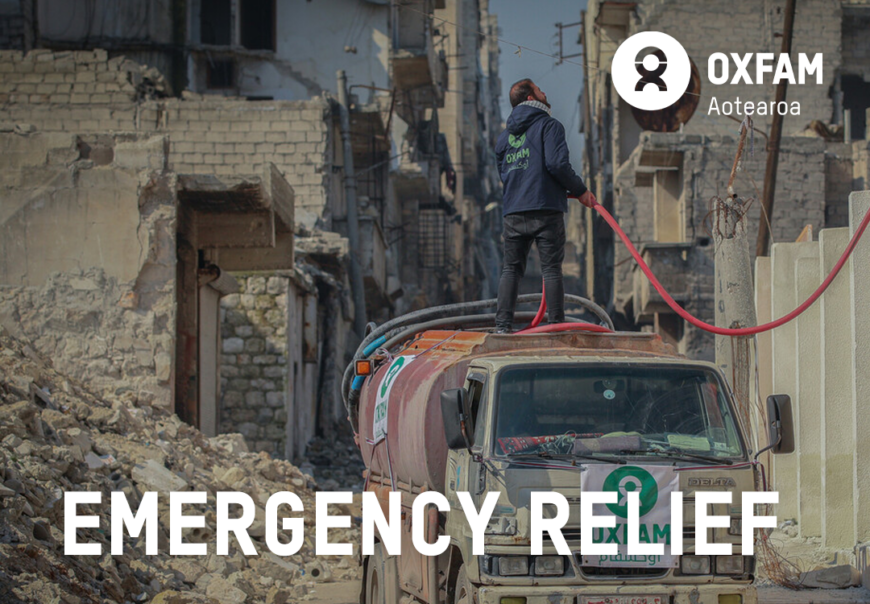
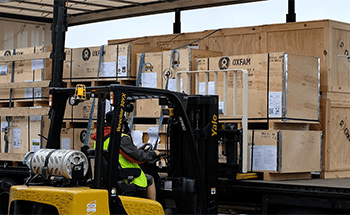
In August 2023, 24.5 tonnes of equipment (pictured) was loaded onto trucks headed for Kyiv to support communities affected by the Kakhovka disaster-induced flooding after the collapse of the dam. The equipment included 44 water tanks of various sizes and types, as well as pumps, tap stands and pipe work, and will provide essential clean water to these communities.
EAST AFRICA
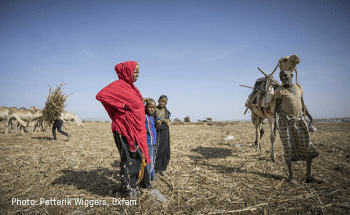
The Horn and East Africa (HECA) is facing one of its most serious episodes of drought in decades. Oxfam has categorised this regional crisis as a Category 1 emergency – the highest and most life-threatening category of crisis. 23 million people in the region face food insecurity and 44.7 million people are in need of humanitarian assistance. Our work is concentrated in 4 countries: Kenya, Ethiopia, Somalia and South Sudan, in each of which we have a long-established presence with country offices and strong local partner organisations. Oxfam is responding with cash and voucher assistance, construction of water infrastructure, and distribution of hygiene and dignity kits.
ROHYINGA REFUGEE CAMPS IN BANGLADESH
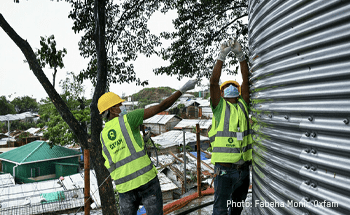
Oxfam’s work has been designed to improve conditions for Rohingya women refugees in Cox’s Bazar by strengthening their participation in community decision-making, and leadership in the camp coordination. Activities focus on mobilising women’s and men’s groups, established in Teknaf and Ukhiya camps in previous MFAT-funded programming, to design and implement their own community-based programming, with emphasis on public health promotion, care work, monitoring and tackling rumour and stigma, and supporting survivors of gender-based violence. Learn more about Bangladesh.
How you can help:
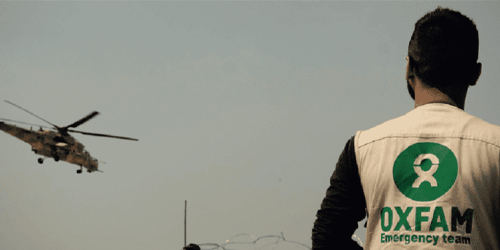
Each year more than 30 million people flee their homes or lose their livelihoods as a result of conflict and natural disasters.
Emergency funds are crucial for Oxfam to act quickly whenever disasters occur around the world. With your help, we can launch a rapid response after tropical cyclones, earthquakes or human-made accidents.